For nearly twenty years I have spent a lot of time waiting for animals that barely move. A sloth might take hours to climb to the next branch up. You can set up under a tree, watch it start the journey, and by the time it arrives you have eaten lunch, refilled your water bottle, and started wondering if you imagined the whole thing.
The first time I really learnt the way of the sloth was when I came to Costa Rica to photograph orphaned sloths at a sanctuary. A wild female showed up in the surrounding forest, carrying a newborn that could not have been more than a week old. I dropped everything. She was also being followed by a PhD student doing her field research, a young scientist named Rebecca Cliffe, and for the next few weeks the two of us tracked that mother and baby together.
That sloth changed the course of my career. She is the reason I became a trustee of The Sloth Conservation Foundation, which Becky went on to found, and the start of a friendship that has since taken the two of us a long way from that first Costa Rican forest.
Sloths are built to be invisible. Their fur grows algae, which gives them a greenish tinge that blends into the canopy. They move so little that their outline reads as just another clump of leaves or a broken branch. Add in the fact that they live at the very top of the tallest rainforest trees, often eighty or a hundred feet up, and you start to understand why most people who walk through a Costa Rican rainforest never see one, even when there is a sloth resting directly above their heads.
I cannot count the number of times I have stood under a tree with an experienced sloth researcher, unable to see anything, while they point up and say, right there. It takes a trained eye. It takes knowing which trees sloths favor, which shapes in the canopy are worth a second look, which patch of “leaves” has an outline slightly too round and slightly too still to actually be leaves. This is not something you pick up in an afternoon. The sloth scientists I work with have spent years learning to read a canopy the way most of us read the pages of a book.
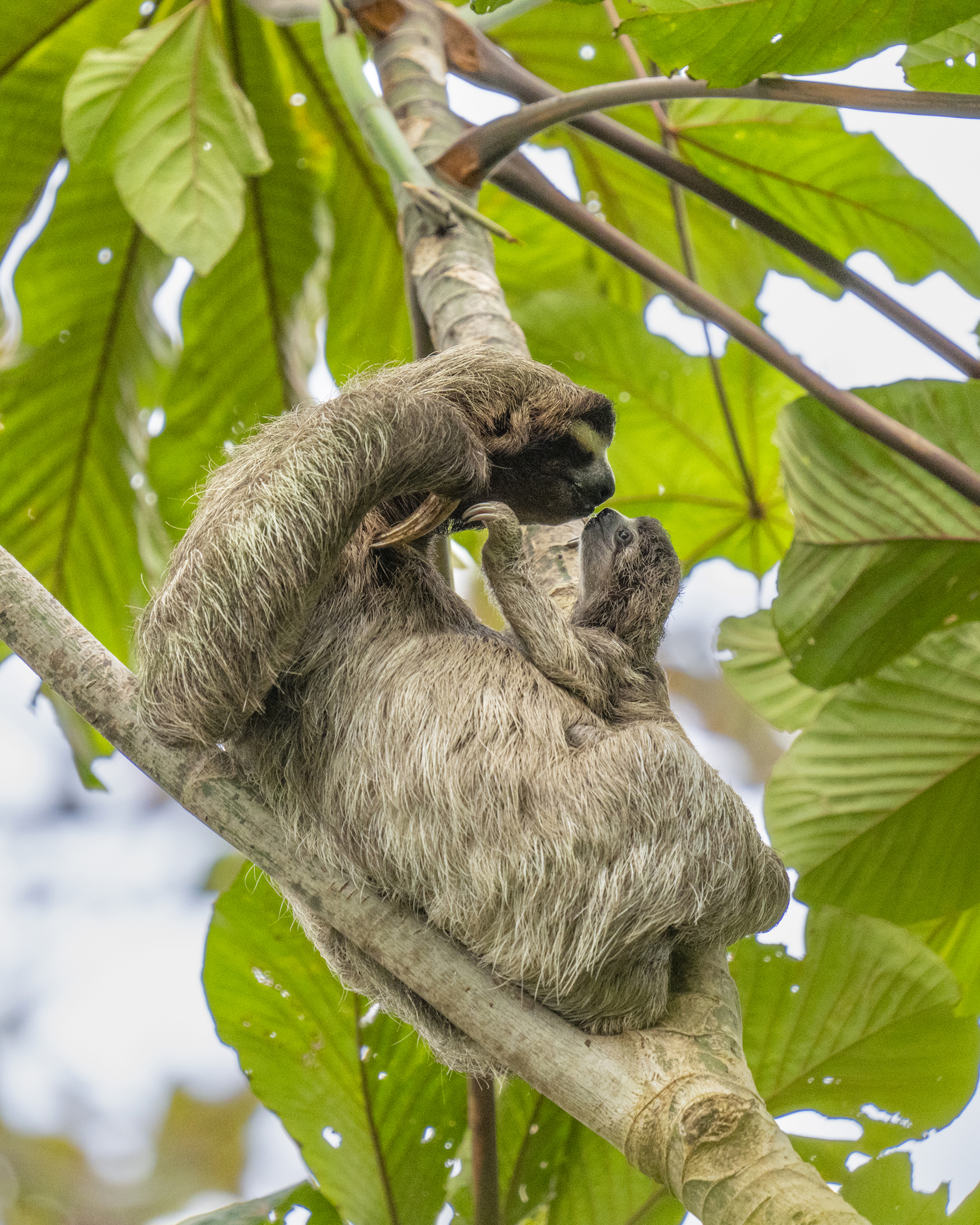
This is why I always tell people, if sloths are on your list, go with someone who knows how to find them. You can walk through the same patch of forest and see nothing, or you can walk through it with the right person and find three sloths in an afternoon, one of them with a baby clinging to her chest.
Over the years, that first wild sloth in Costa Rica led me to a friendship and working relationship with Dr. Rebecca Cliffe, founder of The Sloth Conservation Foundation. Becky has spent more of her career staring up into trees at sloths than almost anyone alive. We hatched a plan a while back to try to photograph every species of sloth in the wild. We have done five of the seven so far, and every single expedition has taught me something new about patience.
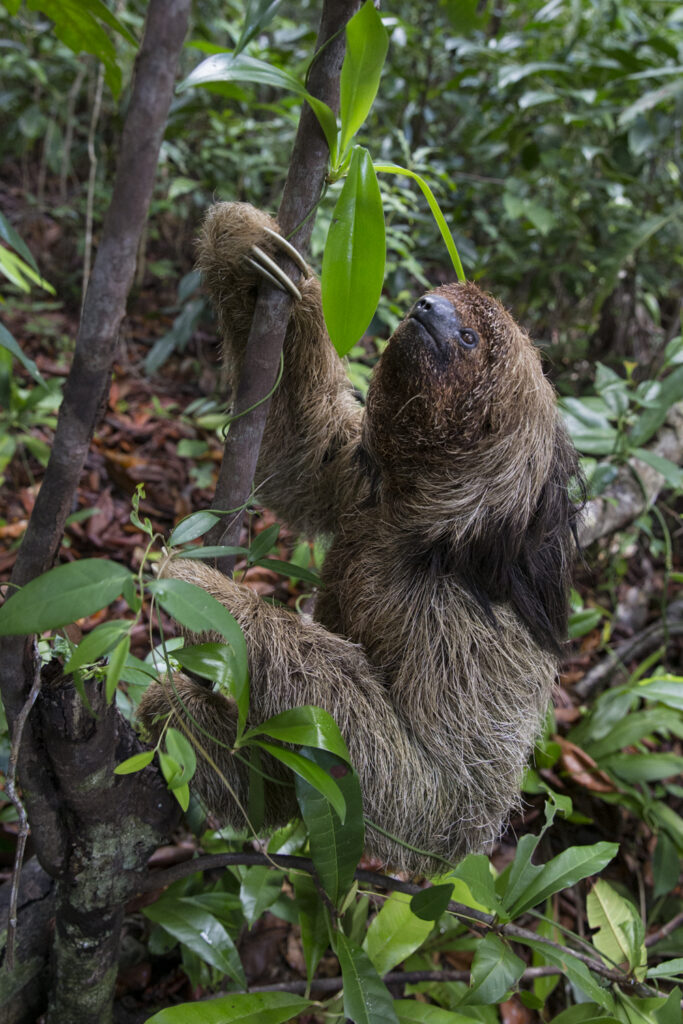
The hardest one was the maned sloth in Bahia, Brazil. Becky and I spent most of that trip lying on the forest floor for fourteen hours at a stretch, staring up at a small patch of fur we could barely make out, high in the canopy, completely camouflaged by leaves and branches. That patch of fur was, for most of the trip, the entire sighting. It took eighty four hours of searching before I finally got the shot I wanted, a male with his thick black mane, more fierce and lion-like than any sloth I had encountered before or since.
Then there was Sloth Island in Guyana, which is about as close to paradise as I have found for pale-throated sloths. Becky and I spent a week there, and some days we found eleven different sloths, which for sloth photography is an extraordinary number. I fell asleep more than once waiting for a mother and baby pair to wake up. Becky never did. She has an ability to stay alert through hours of a sloth doing absolutely nothing that I have never quite matched, and she teases me about it constantly.
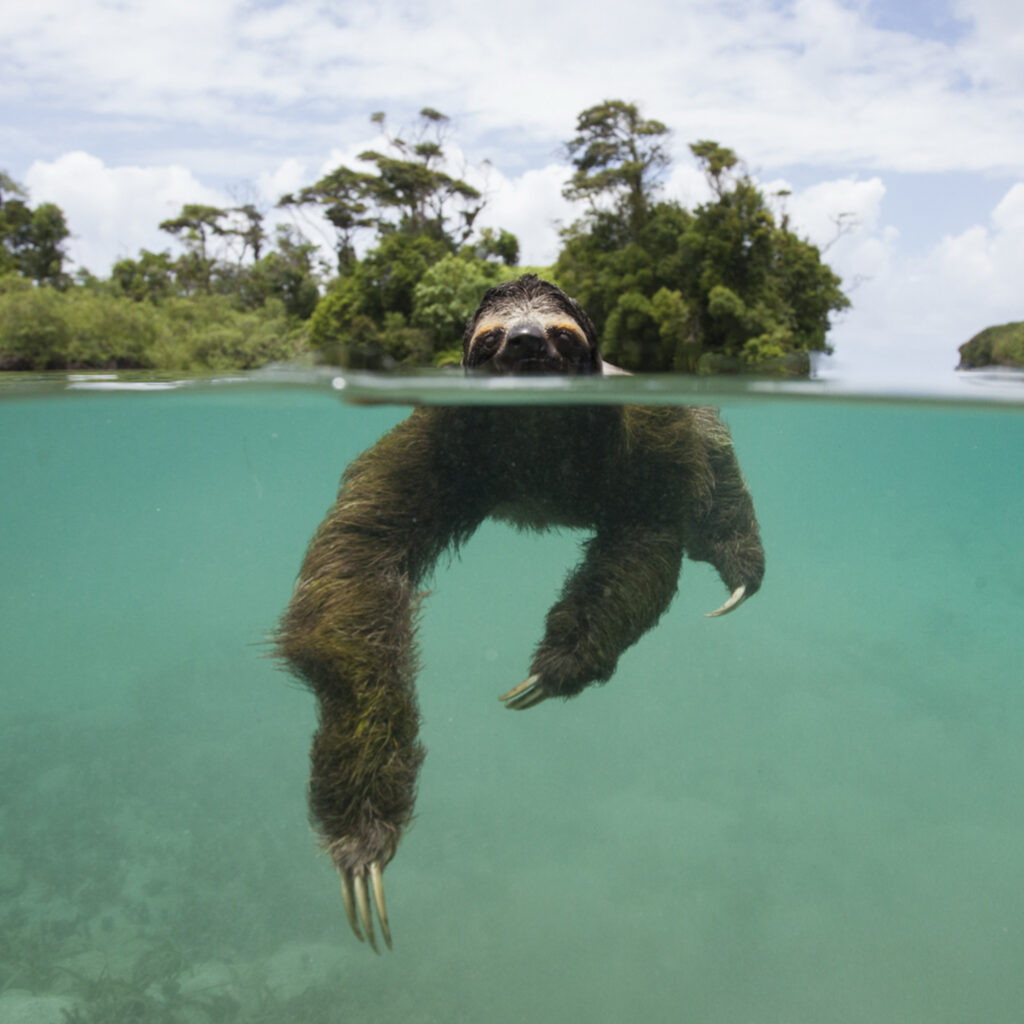
Not every expedition has been that gentle. Photographing pygmy sloths meant traveling to a remote, uninhabited island off Panama and getting into the water to swim alongside one. It is one of the most intimate wildlife experiences I have ever had, right up until I swam through a patch of sea grass thick with jellyfish and spent the rest of the shoot getting stung while trying not to lose the moment. We also got stranded on that island for two extra days when a storm rolled in, rationing water and sleeping curled up on the floor of a speedboat. Some fishermen caught us lobster and cooked it over a fire on the beach, which remains one of my favorite meals of my life, storm and all.
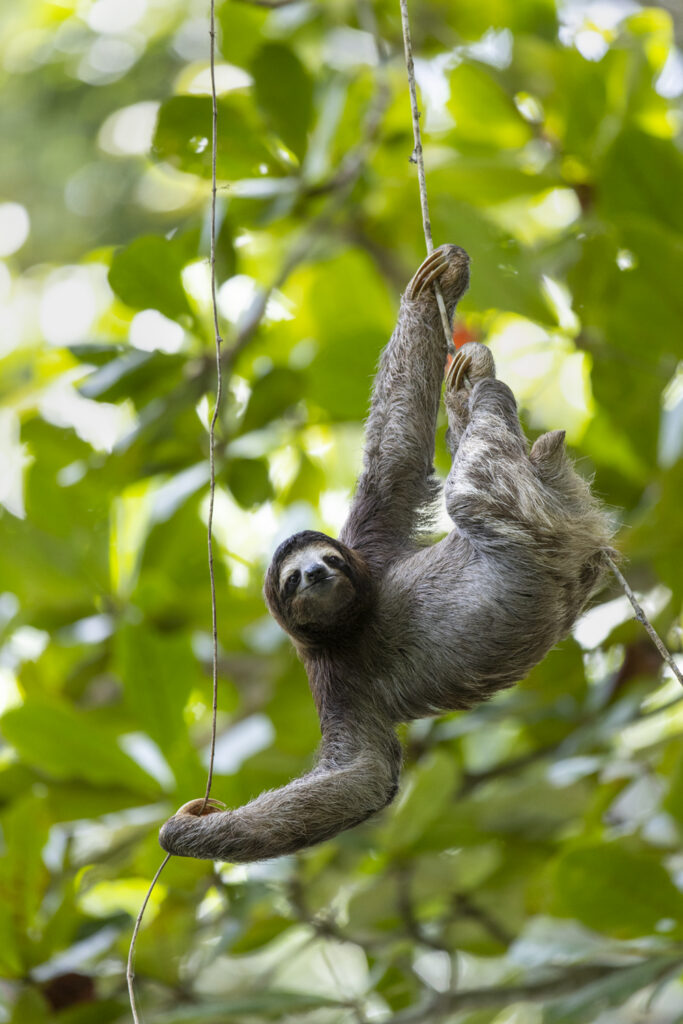
There is something about spending hours with a sloth that rearranges your sense of time. You go into the forest with a plan, a schedule, a mental list of what you want to accomplish that day, and the sloth will have none of it. It moves when it needs to move and rests when it needs to rest, and nothing you do will speed that up. After enough hours of this, something in you starts to loosen. You stop checking your watch. You start noticing the smaller things around you, the sound of a bird you had not registered before, the particular quality of light coming through a gap in the canopy.
I have thought a lot about why sloths affect people this way, myself included. I think it is because we spend so much of our lives being told to move faster and hustle, and here is this animal thriving, genuinely thriving, by doing the opposite.
Sloths have survived for millions of years with this slow strategy. Their low metabolism, their unhurried pace, it is not a flaw. It is precisely how they conserve energy on a low calorie diet of leaves. There is a lesson in that, whether or not you set out looking for one. Slow is not the same as behind. Slow can be its own kind of intelligent.
I do not think you need to be a wildlife photographer to feel this. I have watched people who have never spent real time outdoors sit under a tree with a sloth researcher and go quiet in a way I recognize, because I have felt it myself more times than I can count. There is something about being forced to stop, genuinely stop, and wait on nature’s terms rather than your own, that most of us do not get to experience very often anymore.
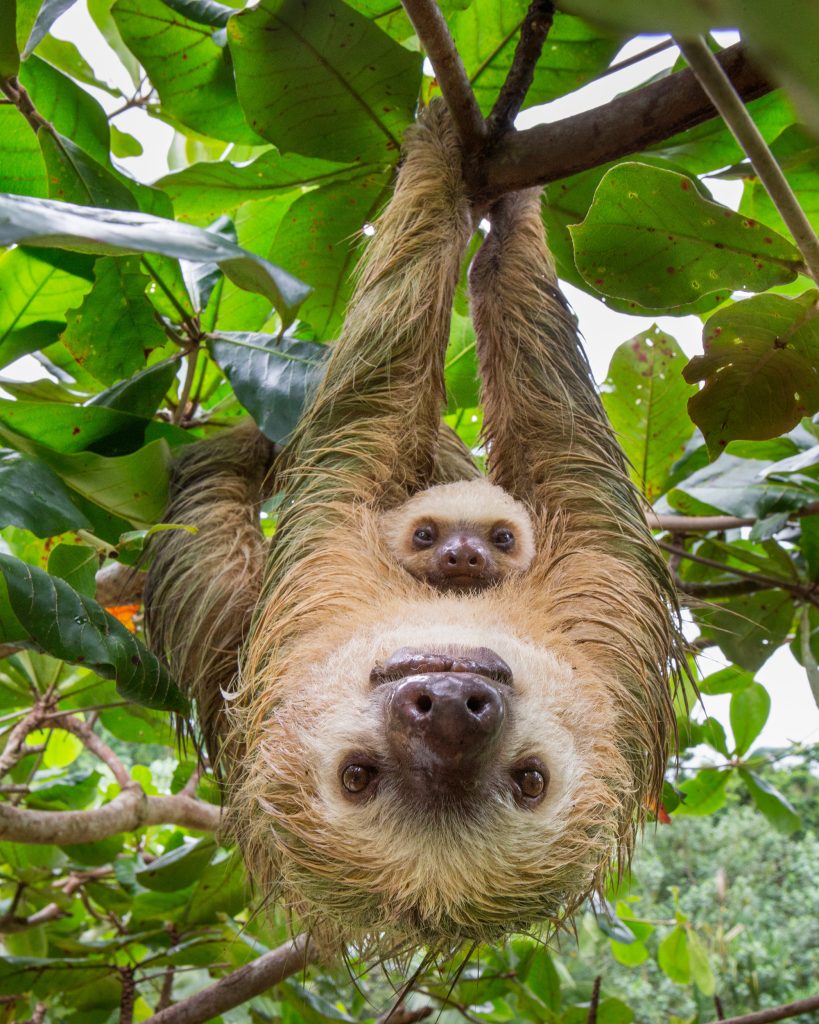
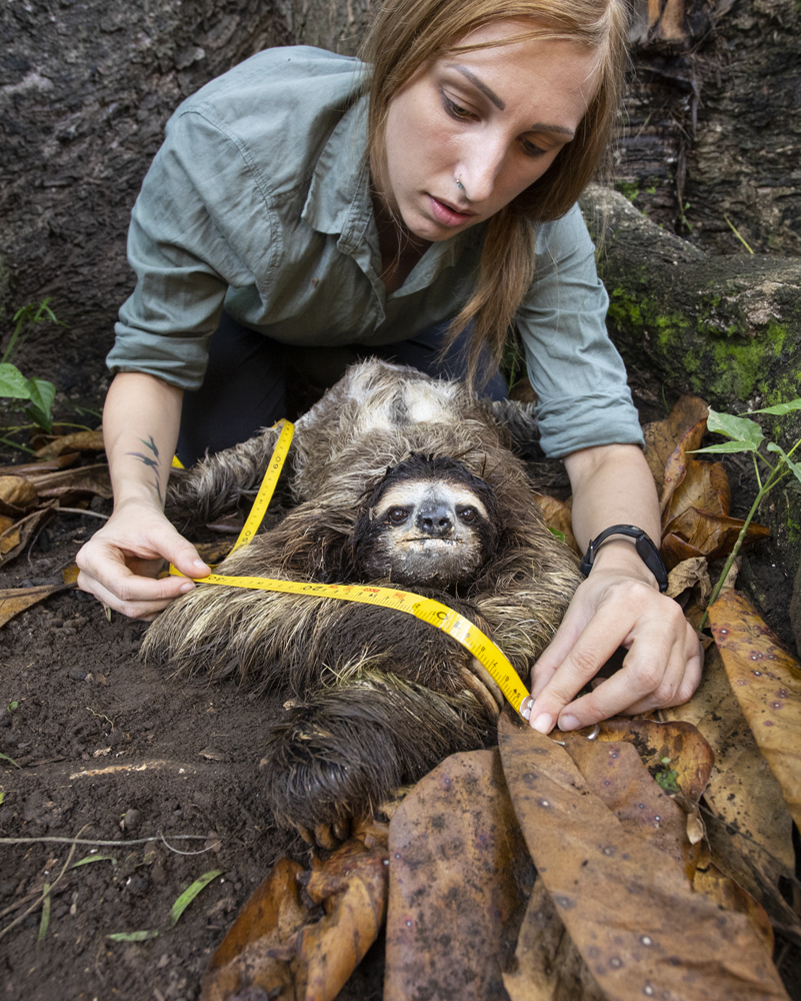
Sloths in Costa Rica face real threats, from habitat loss to the dangers of roads and power lines cutting through forest that used to be continuous canopy. The Sloth Conservation Foundation spends its time building solutions to these exact problems, things like sloth crossings that let animals move safely between trees without coming down to the ground, where they are far more vulnerable.
When I spend time in the field with Becky and her team, I am not just watching sloths. I am watching people do the unglamorous, patient work of saving a species. It means something to know that the time you spend looking up into a tree is tied to real research, not just a photograph.
I am proud to serve as a trustee for the Sloth Conservation Foundation. I have spent enough hours on the forest floor with this organization to know exactly what their work involves and exactly why it matters.
This is also why, when I design private trips to Costa Rica, sloths and this particular partnership sit at the center of the experience. I do not send people out to wander a trail and hope for the best. I send them into the same forests I have spent years in, with the same researchers who taught me how to actually see a sloth, and let them have their own moment when a guide points at what looks like a clump of leaves and it turns out to be a mother with a baby. Because the Sloth Conservation Foundation team knows where the sloths are, the sightings are usually close, intimate and always 100% ethical.
Costa Rica works especially well for this because it holds so much more than sloths. On the same trip, you might be crossing a hanging bridge through the tree canopy and hear howler monkeys before you see them, or step out onto your veranda in the morning and find a toucan sitting in the tree outside your room. I choose eco lodges that put wildlife right at the doorstep, so the experience does not end when the day’s outing does. It is also one of the few destinations I recommend without hesitation for every age.
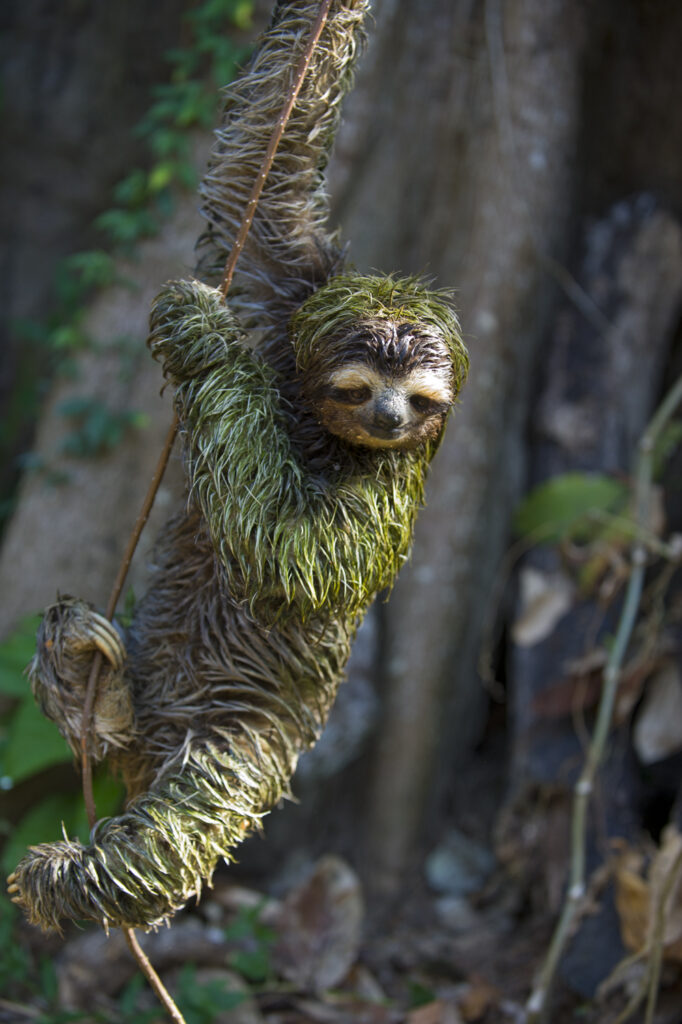
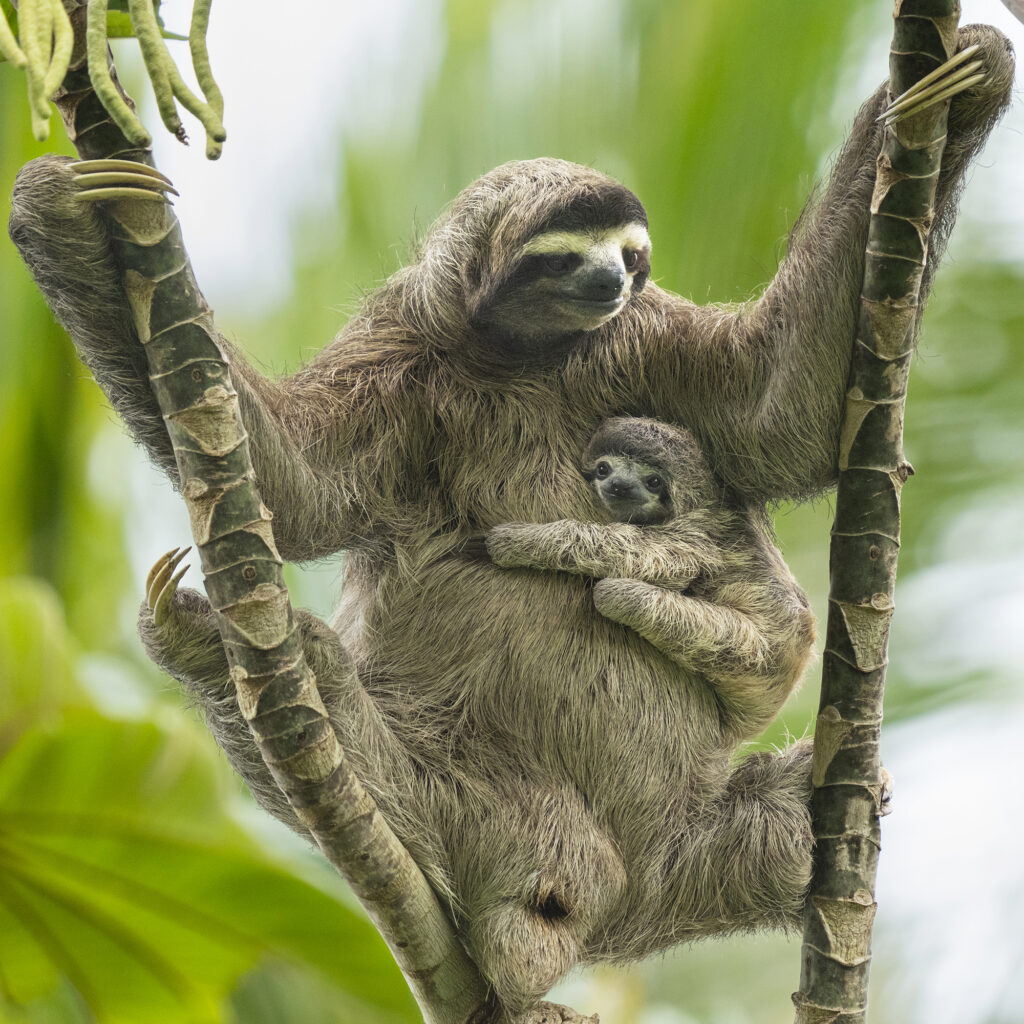
My youngest traveler in Costa Rica this year was seven. My oldest, and by far the wisest, was eighty four. Both had the same reaction watching a sloth for the first time, which is to go completely quiet . . . zen-like.
My honest advice, if you are planning to go looking for sloths on your own, is to bring someone who knows the forest. I say this as someone who has spent the better part of two decades trying to find these animals and still misses them constantly without help. A trained guide changes everything. And do not skip a night walk while you are there. After dark, the forest turns over to an entirely different set of animals, red eyed tree frogs, tent making bats, and a long list of nocturnal creatures that most visitors never even know exist a few feet from the trail.
A custom Costa Rica tour is designed around your interests, your pace, and your curiosity. With hand-selected eco-lodges, private experiences with world-renowned sloth expert Dr. Rebecca Cliffe, and the best naturalist guides, you enjoy deeper encounters in cloud forests, rainforests, and along untouched coastlines.
Perfect For:
More connection, more authenticity, and moments that stay with you forever!
Sloths, Costa Rica tour, Sloth tour